Every looner knows the moment when there’s the tiny hiss and the slow deflate moment. There’s a leak somewhere🫢
And honestly? A leak can be incredibly hot when playing.
The suspense, the vulnerability of the toy, the feeling that you’re right at the edge of control… it’s no wonder so many looners secretly love the
ultimate sensation of discovering a leak
.
But excitement has a darker twin: damage or popping. Some may seek this, some may really hate it.
A small puncture can grow into a tear.
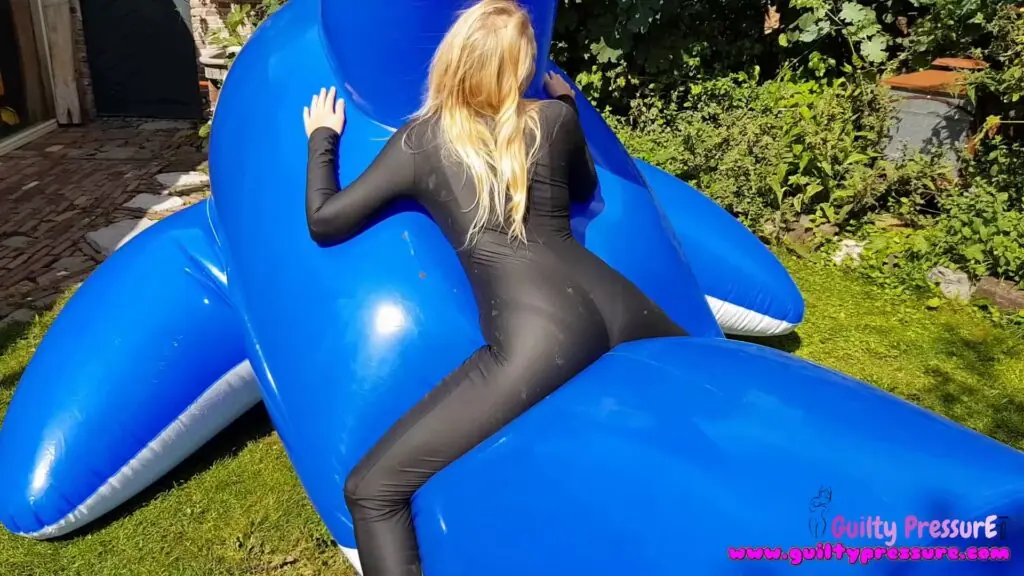
A weak seam can suddenly split wide open — especially if you’re riding with extra weight, or even with two riders.
And if you’ve ever explored
duo riding on inflatables
,
you already know how quickly pressure multiplies. Same goes for the fast ripping of a seam after the leak started👀
That’s why the nonpop looner should learn not only how to repair…
but also how to reinforce their beloved pooltoy🩵
Reinforcing Inflatables: Preventive Strength Before the Pop
How I see it: Repairing is reactive, reinforcing the inflatable is a way to proactively approaching it.
And in the inflatable community, one name is legendary:
HH66 Vinyl Cement.
This stuff is practically folklore among serious riders
It’s one of the most well-known tools for strengthening PVC inflatables, and it has saved many beloved toys from an early end.💪🏽
A perfect example is the iconic blue giant inflatable pillow, which survived multiple repairs before finally experiencing its last bounce:
Blue giant inflatable pillow (repair example) Another look at the giant pillow’s lifeBy patching weak spots before they fail, you can reinforce high-stress areas like:
- seams. obviously the weakest points.
- riding zones
- stress points
- corners that fold repeatedly (these may rip too after a while)
Preventive patching is like armor for your inflatable.
It won’t make it immortal…
but it can dramatically extend its life😁
How to Repair a Leak (The Classic Looner Method)
Repairing a puncture isn’t complicated, but it does require care and patience.
Here’s the basic process used by many experienced looners:
1. Clean the Area Around the Leak
Before anything else, make sure the surface is clean and dry.
Dust, skin oils, lubricant residue — all of these reduce adhesion. The cement, though, would still be fine (unless it really is messy around the patching area).
A simple wipe with mild soap and water is often enough. Want to go more thourough? Use alcohol🔥 Let it dry completely before you start😉
2. Prepare a Patch
Cut a small piece of vinyl patch material.
You can use:
- transparent vinyl
- vinyl in the same color
- spare material from an old inflatable
Round the corners of the patch so it won’t peel easily.
3. Apply HH66 Vinyl Cement Carefully
Use a small amount.
Follow the manufacturer’s instructions exactly — not just for effectiveness, but for your own safety. There’s toluone in it, very toxic☠️
Spread a thin layer on:
- the patch
- the inflatable surface
Wait the recommended time until it becomes tacky.
4. Press and Seal
Place the patch carefully, then press firmly.
Use a roller, a spoon, or your hand (use gloves👋🏽) with steady pressure.
The longer the cement cures, the stronger it becomes. I’ve tried it many times before but it really works like that🏋🏽
They don’t say it for nothing:
“The cement is even stronger than the material itself.”
HH66 was originally designed to repair sailboat vinyl and marine fabric.
If it can survive the ocean…
it can survive a looner session…right?!😏
Alternative: Soft PVC Glue
If you don’t have vinyl cement, soft PVC glue can work as a backup.
But realistically, it performs about 50–60% less effectively than HH66 based on my long and exhaustive journey of patching and testing🫠
Better than nothing, but not the gold standard.
Ventilation Matters: Respect the Chemistry
Vinyl cement is powerful because it’s chemical.
And that means one thing:
Always work in a well-ventilated environment.
Open windows.
Use airflow.
Avoid breathing concentrated fumes.
Looner play should be intoxicating emotionally, not literally 😉🎈
After patching, allow the inflatable to cure in fresh air before heavy use.
Your lungs (and your toy) will thank you.
Final Thoughts: Protect the Toys That Matter Most
Leaks CAN be fun, yes, and repairs are satisfying when done properly. Reinforcing is a way of preventing leaks you actually don’t want!
Especially when dealing with higher-risk toys, like:
Rubberized inflatables
Softened or rubberized surfaces are more fragile and should almost always be reinforced early, before rubberizing and softening your inflatables . Poppers may prefer to leave it fragile!😏
Custom-made inflatables
If you’ve invested in a premium custom toy , prevention is everything!🔥
Because the best inflatable isn’t the one that pops dramatically…It’s the one that survives long enough to keep giving pressure, shine, bounce, and fantasy for years.
Happy patching & good luck with reinforcing and enjoy many more bounces & rides🎈